
What it is
Overview
SGLang is an open-source inference server for running large language models in production. The project centers on RadixAttention, a caching kernel that cuts redundant computation when serving multi-turn conversations or batch requests with shared prefixes. ML engineers and AI infrastructure teams use it to run frontier models across multi-GPU setups — the project claims deployment on 400,000+ GPUs generating trillions of tokens daily. GitHub discussions show adoption at research labs and companies building high-throughput LLM services.
At a glance
Usability & Quality overview
Best for
- high-throughput LLM inference
- multi-GPU serving
- latency-sensitive production experimentation
Watch out for
- High-concurrency stability
- Feature gaps versus more mature serving stacks
- Security posture and patch cadence
Real product, not a wrapperIndependent product
SGLang built RadixAttention, a proprietary GPU kernel that reuses shared prompt prefixes to optimize LLM inference — this is infrastructure-layer innovation, not a wrapper around OpenAI/Anthropic APIs. Users report 2-4× throughput gains over competing frameworks like vLLM in specific workloads. The tool also automates complex workflows via tensor parallelism and data parallelism, which reviewers cite as a key differentiator.
Strong evidenceQuality score
SGLang Production LLM inference framework with strong throughput and latency, but missing some advanced features.
This score is our editorial judgment, computed automatically from the sources, weights, and dates shown above. It reflects the data we could verify as of November 16, 2026, not a guarantee or statement of fact about SGLang. Third-party ratings and quotes belong to their original platforms and authors. Thin data lowers our confidence label, and we say so instead of guessing. Work on SGLang? Dispute any datapoint and we will review it, publish your response, and correct verified errors.
PricingFree
Individual plan details haven't been verified yet — they'll appear here on the next data refresh.
Community feedback
Aggregated reviews
Ratings and quoted comments below are aggregated from third-party sources and reflect those users' views, not SearchTools.ai's.
What reviewers talk about
themes inside the Sentiment pillar — not score ingredients
82Output Quality19 mentions
“I’ve spent the last few weeks getting a repeatable SGLang serving stack running on two Radeon AI PRO R9700s (gfx1201 / RDNA4, 32 GB each, PCIe only, no XGMI). I’m serving AMD’s Qwen3.8-27B Quark MXFP4 (W4A4) with the DFlash2 speculative draft, using tensor parallelism across both cards. As suggested by another Redditor, I benchmarked this using BetterBench with the same profile as Radiance’s op233/op234 published figures. The Benchmarks Metric Radiance (op233/op234) This Custom Stack 1 request (”
“I was able to replicate your numbers, so good job on the SGLang tuning, it's *much* better than the OOTB SGLang setup. That being said, while the increased memory fraction, lower gama, and mamba slots all help, TP1 kv token pool for SGLang is still a bit below vLLM (you also give up some speed for capacity w/ the mamba slots). At low concurrency and context, the SGLang setup has a bit higher decode, however, however, at near capacity (250K input, 8K output) I found vLLM (w/ the official FP8)”
“Where are you finding those published Radiance numbers? My out of the box TP2 setup runs MXFP4 Qwen 3.8 27B at 180tps decode single request, so those seem more than a little low.”
“SGLang is an open-source inference engine designed by the SGLang team to address these challenges. It optimizes CPU and GPU resources during inference, achieving significantly higher throughput than many competitive solutions. Its design utilizes an innovative approach that reduces redundant computations and enhances overall efficiency, thereby enabling organizations to manage better the complexities associated with LLM deployment. RadixAttention is central to SGLang, which reuses shared prompt ”
38Ease of Usethin data · 8 mentions
“You made something complicated feel effortless!”
“I started installing SGLang following this documentation: https://docs.sglang.io/docs/hardware-platforms/amd_gpu#install-using-docker-recommended But it been an hour and the docker build is still running. How long does it take? Should I stop it? Am I doing something wrong? Also, I just followed the steps in docs. But now I see the architecture selected in gfx950, but I am on gfx1201. I hope the time spent on building it is not wasted due to this. UPDATE: It's been an hour since I posted this. Bu”
“TLDR: What quantizations do you guys run on sglang? I want to run Devstral 2 on my sglang server. The model is a bit big for my hardware so I opened the quantizations page in huggingface and copied from there: `--model unsloth/Devstral-2-123B-Instruct-2512-GGUF` sglang protested: `ValueError: Unrecognized model in unsloth/Devstral-2-123B-Instruct-2512-GGUF.` So I figured, guess I need more packages. `unsloth` is a package, lets install that, maybe it magically teaches sglang how to parse GGUF. A”
“I know VLLM support of GGUF is spotty, doubt sglang much better. You are linking to the model folder though and not the file. I guess another thing to say is that the file probably has to fit in your vram. IDK about cpu inference in sglang, let alone performant one.”
Watch & learn
Video content
YouTube YOUTUBE2.9M views
How inference works at scale? vLLM and SGLang inference engines
vizuara13 days ago
 YOUTUBE354 views
vLLM vs SGLang: When to use which?
nexdes1 month ago
 YOUTUBE246 views
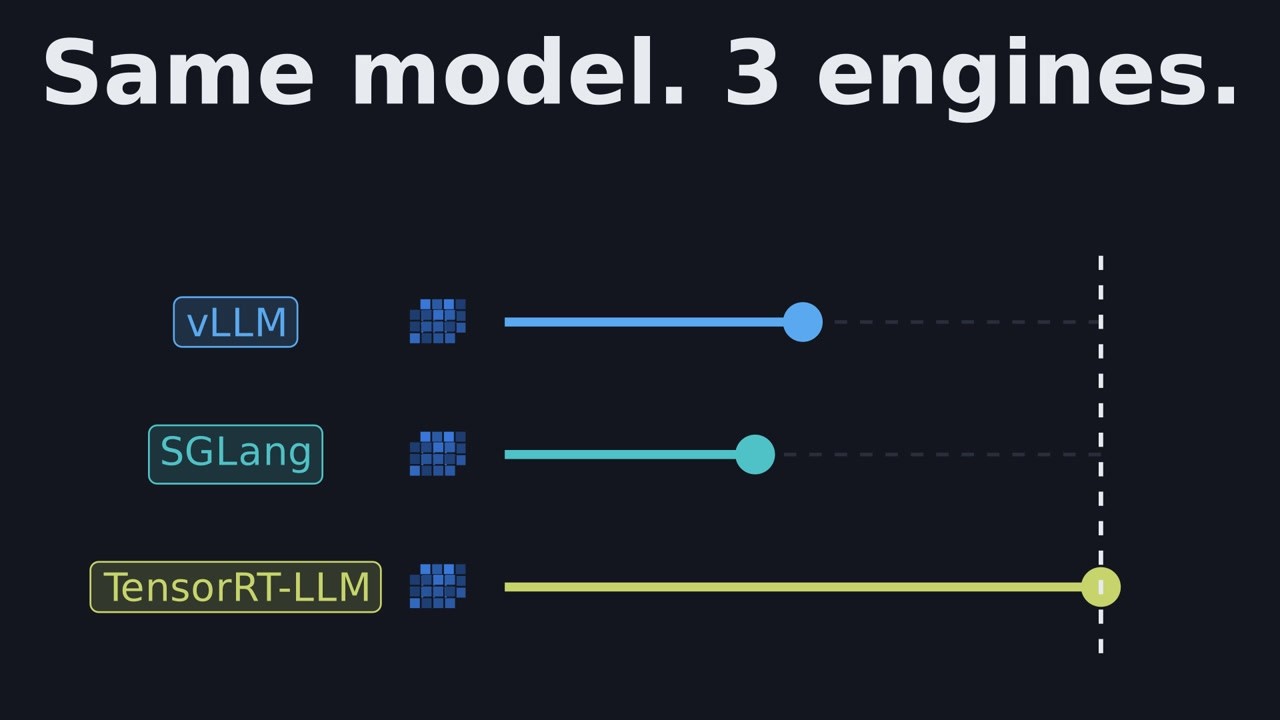
vLLM vs SGLang vs TensorRT-LLM, and Honest Benchmarks | Inference Engineering Ep 18
QueticCS9 days ago
 YOUTUBE1K views
DeepInfer, Explained: How DeepSeek Serves a Giant Model to Millions (vLLM → SGLang → DeepInfer)
tyrchen126 days ago
 YOUTUBE477 views
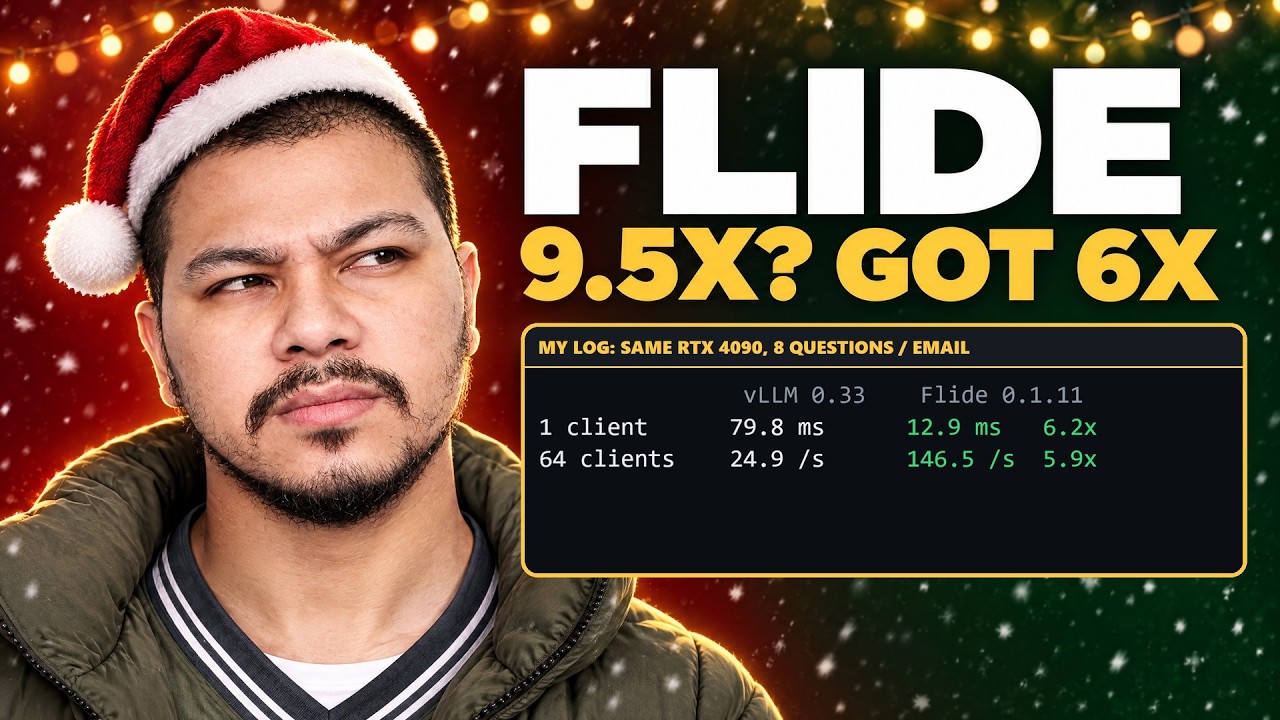
Flide: I Tested The "9.5x Faster" AI Inference Engine - It Hit 6x On My GPU (WILD)
PromptEngineer487 days ago
 YOUTUBE169 views
vLLM & SGLang on Windows? (The 1-Click Unsloth Guide)
RicafortLabs15 days ago
Capabilities
Key features
Developer Tools
Provides utilities that help programmers build, test, and ship software faster
The honest take
What users love & flag
Distinct themes surfaced across user reviews — each grounded in real review text, ranked by how often it comes up.
Questions
Frequently asked
What is SGLang?
SGLang is a production-ready LLM inference framework designed to serve large language models at scale with low latency and high throughput. It uses RadixAttention and prefix caching optimizations to efficiently handle inference requests, and currently powers over 400,000 GPUs generating trillions of tokens daily in production environments.
Is SGLang free to use?
Yes, SGLang is distributed as open-source software hosted under the LMSYS non-profit organization. Users can access and deploy the framework without licensing costs, though they will need to provide their own infrastructure and hardware resources.
What hardware platforms does SGLang support?
SGLang supports a wide range of hardware accelerators including NVIDIA GPUs, AMD accelerators, Intel Xeon processors, Google TPU, Ascend NPU, and Moore Threads MUSA accelerators. This broad hardware compatibility allows organizations to deploy on their existing infrastructure without vendor lock-in.
What is RadixAttention and how does it improve performance?
RadixAttention is a specialized attention mechanism in SGLang that optimizes inference workloads through prefix caching. This technique provides efficiency gains over standard attention implementations by reusing previously computed attention values, resulting in lower latency and higher throughput for production deployments.
Which language models can I serve with SGLang?
SGLang supports popular model architectures including Llama, Qwen, and DeepSeek. The framework includes compatibility layers for both Hugging Face and OpenAI API formats, allowing developers to migrate existing applications with minimal code changes.
Can SGLang handle multiple inference requests simultaneously?
Yes, SGLang supports batch processing of multiple prompts and implements multi-GPU parallelism to distribute inference workloads across hardware resources. It also provides streaming responses and can scale across distributed GPU clusters for high-volume production environments.
How do I integrate SGLang into my existing application?
SGLang operates as an inference server that you deploy to serve language models. Users can send inference requests through Python or API calls, and the framework provides compatibility with standard Hugging Face and OpenAI API formats, enabling integration with minimal code modifications.
What kind of production scale has SGLang been proven at?
SGLang has achieved significant production adoption, powering more than 400,000 GPUs worldwide and generating trillions of tokens daily across large-scale deployments. The framework has been integrated into major reinforcement learning frameworks and is used in demanding enterprise environments.
Where can I get support if I have technical questions about SGLang?
Users can access community support through Slack channels for technical questions and participate in developer meetings and events. The project maintains active development with documentation covering installation methods and quickstart guides available at docs.sglang.io.
Compare SGLang
Compare with another toolMore Like This
