
What it is
Overview
Pollen Robotics builds physical robots for AI experimentation and education. The company makes two main models: Reachy Mini, a humanoid robot with expressive movements for human interaction research, and Microduck, a smaller robot for reinforcement learning projects. This is hardware, not AI software — the robots serve as physical bodies that researchers and educators can program with their own AI models. The audience skews toward robotics educators, computer science students, and hobbyists working on embodied AI projects.
At a glance
Usability & Quality overview
Best for
- AI robotics experimentation
- open-source hardware tinkering
- human-robot interaction demos
Watch out for
- Limited evidence of long-term owner experience
- Community discussion is still launch-heavy
Real product, not a wrapperIndependent product
Pollen Robotics creates physical robot hardware that brings AI concepts into the real world - something you can't get from ChatGPT or other software-only AI tools. Their robots like Reachy Mini and Microduck offer hands-on learning experiences with proprietary hardware designs.
Strong evidenceQuality score
Pollen Robotics Open-source desktop robotics for AI experimentation and expressive interaction.
This score is our editorial judgment, computed automatically from the sources, weights, and dates shown above. It reflects the data we could verify as of September 1, 2026, not a guarantee or statement of fact about Pollen Robotics. Third-party ratings and quotes belong to their original platforms and authors. Thin data lowers our confidence label, and we say so instead of guessing. Work on Pollen Robotics? Dispute any datapoint and we will review it, publish your response, and correct verified errors.
Plans
Pricing
How free is free?
Genuinely free
Reachy Mini robot platform available at no cost
What you get for free
- Reachy Mini expressive companion robot
- Human interaction capabilities
- Creative coding platform
- AI experimentation support
Behind the paywall
- Advanced biped walking capabilitiesMicroduck ($399)
- 15-motor system with graspingMicroduck ($399)
- Self-recovery mechanismsMicroduck ($399)
Community feedback
Aggregated reviews
Ratings and quoted comments below are aggregated from third-party sources and reflect those users' views, not SearchTools.ai's.
What reviewers talk about
themes inside the Sentiment pillar — not score ingredients
53Output Quality20 mentions
“Dang why are all these commenters devoid of life and any semblance of fun? This is neat! Reminds me of other fun robots that are great for education and getting kids excited about building (ex mindstorm ). I for one am happy to see this.”
“great at first then backend bugs out. open ai can't connect on backend(default when I turned it on 3 days ago). huggingface also doesn't work. 55 apps and most don't even work. pretty much useless as wireless upgrade. support is limited, with conversation it's overpriced motor movement. can get that for way cheaper.”
“It looks cool as a way to learn real rl based motion . But as somebody who did exactly that with dynamixel servos in the past I (look at my older posts) can tell you they will break a lot and develop really bad backlash over time. Especially when you control them with RL. Most other modern RL robots use QDD actuators and that has a reason. The robot looks pretty light so it might be less of an issue, but still.”
“Pollen Robotics and Hugging Face are releasing an open-source bipedal robot that comes with reinforcement learning software. It looks like it has a speaker, camera + LiDAR, NFC, Wifi, Bluetooth, etc. And roller-skates, because that's just the cutest thing ever. They announced it here: https://pollen-robotics.com/microduck/ Honestly, this thing is so adorable, I love how it waddles.”
26Value & Pricingthin data · 9 mentions
“This is AMAZING! I dreamed of something like this a couple years ago, after coming across expensive proprietary robots that wouldn't work for my niche use-case. Never thought anyone would actually make an open source so quick, cute, & non-threatening at a price point I could actually afford! 🤯 🤩 I've got a non-verbal special needs kid, with extreme demand avoidance/anxiety, so I'm super excited about the possibilities this offers!”
“$399 is a straight up fabrication - go through the order flow and see all the fees being added, it's actually $508 by the time you purchase.”
“I feel there's no use for this robot at all. Maybe kids play with it but it's expensive yet for some reason they show adults in the ad.”
“Looks like a fun project to build with my daughter. (looks at price) The fuck”
Watch & learn
Video content
YouTube YOUTUBE1.8K views
Microduck: $399 Robot Duck With a Free, Open Source Brain
AwesomeFOSS22 days ago
 YOUTUBE6.9K views
This Little Duck Is a Huge Hit: MicroDuck | MICRODUCK | Hugging Face × Pollen Robotics
mgjj19 days ago
 YOUTUBE195 views
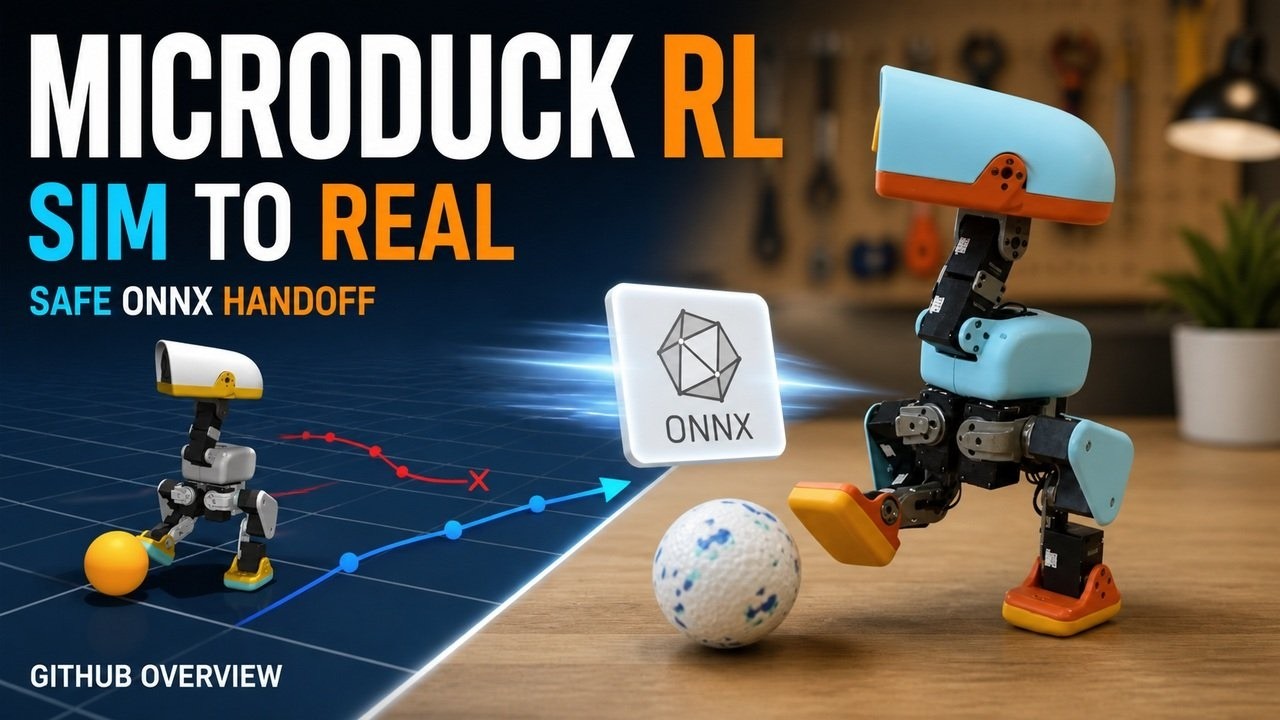
Microduck Rl GitHub Overview: From MuJoCo PPO Training to a Safe ONNX Robot Handoff
alexander-hitt19 days ago
 YOUTUBE86 views
Micro Duck: $399Open-Source Robot — Train Physical AI with Reinforcement Learning🦆🤖⚡ @AI_Vanguard_AI
AI_Vanguard_AI20 days ago
 YOUTUBE32 views
The Desk Duck That Learned to Roller-Skate
GENAIKIDS20 days ago
Capabilities
Key features
Agent Builder
Builds autonomous AI agents that plan and execute multi-step tasks for you
The honest take
What users love & flag
Distinct themes surfaced across user reviews — each grounded in real review text, ranked by how often it comes up.
Questions
Frequently asked
What is Pollen Robotics?
Pollen Robotics creates expressive, interactive robots specifically designed for AI builders, makers, and educators who need physical platforms for experimentation and learning. The company offers two main robotic platforms: Reachy Mini for human interaction and creative coding, and Microduck for reinforcement learning applications. They've shipped over 10,000 robots worldwide and focus on bridging the gap between software algorithms and real-world physical interactions.
How much does Microduck cost?
Microduck is available for pre-order at $399. This 25-centimeter bipedal robot comes equipped with 15 motors and is specifically designed for reinforcement learning experiments. Pricing for Reachy Mini is not specified in the available information.
What's the difference between Reachy Mini and Microduck?
Reachy Mini serves as an expressive companion robot designed for human interaction, creative coding, and general AI experimentation. Microduck is a specialized 25-centimeter bipedal robot with 15 motors that can walk, grasp objects with its beak, and self-recover when it falls, specifically targeting reinforcement learning applications where the robot can learn new behaviors through training.
What can Microduck actually do?
Microduck demonstrates advanced capabilities including walking, grasping objects with its beak, and self-recovery when it falls down. The robot can learn new behaviors through reinforcement learning training, allowing developers to experiment with machine learning algorithms in a physical environment. It's equipped with 15 motors that enable these dynamic movements and interactions.
Who should use Pollen Robotics platforms?
These robots are designed for AI researchers, developers, makers, and educators who need tangible platforms for experimentation and learning. They're particularly suitable for individual developers, educational institutions, and research teams working on AI applications that require physical embodiment rather than purely software-based solutions.
Can I program custom behaviors for these robots?
Yes, both platforms are designed for programming custom behaviors. Users can program Reachy Mini to respond to various inputs and create interactive experiences through creative coding. Microduck can learn new behaviors through reinforcement learning training, allowing developers to experiment with machine learning algorithms and teach the robot custom tricks and movements.
Are these robots suitable for industrial automation?
No, Pollen Robotics platforms are positioned as educational and experimental tools rather than industrial automation solutions. They're characterized as dynamic, social, and playful robots that prioritize engaging interaction and learning applications over purely functional industrial robotics tasks.
Compare Pollen Robotics
Compare with another toolMore Like This
