
Low confidence — this score is based on limited public data (mostly aggregate ratings, with little independent discussion or review detail), so it may not reflect real-world quality.
What it is
Overview
LifeOS captures personal goals and context to guide AI task execution toward your ideal outcomes. Built as an intent engineering system that learns your priorities and automatically shapes how AI agents approach work on your behalf. The 35K monthly visitors are mostly productivity enthusiasts and AI power users who want their automation to understand their broader life objectives, not just complete isolated tasks.
At a glance
Usability & Quality overview
Best for
- AI-native workflow automation
- goal/context-driven task execution
- code-oriented assistant harness use
Watch out for
- Sparse firsthand user evidence
- Unclear long-term user satisfaction
Real product, not a wrapperIndependent product
LifeOS appears to offer workflow automation that chains multiple AI tasks together and provides specialized context management for life optimization, going beyond simple AI chat interfaces.
Moderate evidenceQuality score
LifeOS AI-native workflow automation for goal-driven tasks and code assistance
This score is our editorial judgment, computed automatically from the sources, weights, and dates shown above. It reflects the data we could verify as of August 26, 2026, not a guarantee or statement of fact about LifeOS. Third-party ratings and quotes belong to their original platforms and authors. Thin data lowers our confidence label, and we say so instead of guessing. Work on LifeOS? Dispute any datapoint and we will review it, publish your response, and correct verified errors.
PricingFree
Individual plan details haven't been verified yet — they'll appear here on the next data refresh.
Watch & learn
Video content
YouTube YOUTUBE13.9K views
Things Are About to Accelerate (Human 3.0 Preview)
unsupervised-learning1 month ago
 YOUTUBE167 views
LifeOS Review: Brilliant Personal AI, Serious Tradeoffs
BullBearAcademy61 month ago
 YOUTUBE225 views
How to Install and Use LifeOS as Your Personal AI Operating System
eddysayshi1 month ago
 YOUTUBE158 views
LifeOS GitHub Tutorial: Install Persistent AI Workflows With Hard Cost Caps and Verifiable Logs
alexander-hitt1 month ago
 YOUTUBE73 views
4 Hermes Agents Write My Posts. I Just Say Yes.
VibewithAI-xyz1 month ago
 YOUTUBE48 views
LifeOS — The AI-Powered Life Operating System
PraveenGovindaraj-ai-sparks1 month ago
Capabilities
Key features
Productivity Tools
Automates routine tasks and streamlines daily workflows to help you get more done
Workflow Management
Automates multi-step processes and routes tasks across your tools and team
The honest take
What users love & flag
Distinct themes surfaced across user reviews — each grounded in real review text, ranked by how often it comes up.
Questions
Frequently asked
What is LifeOS?
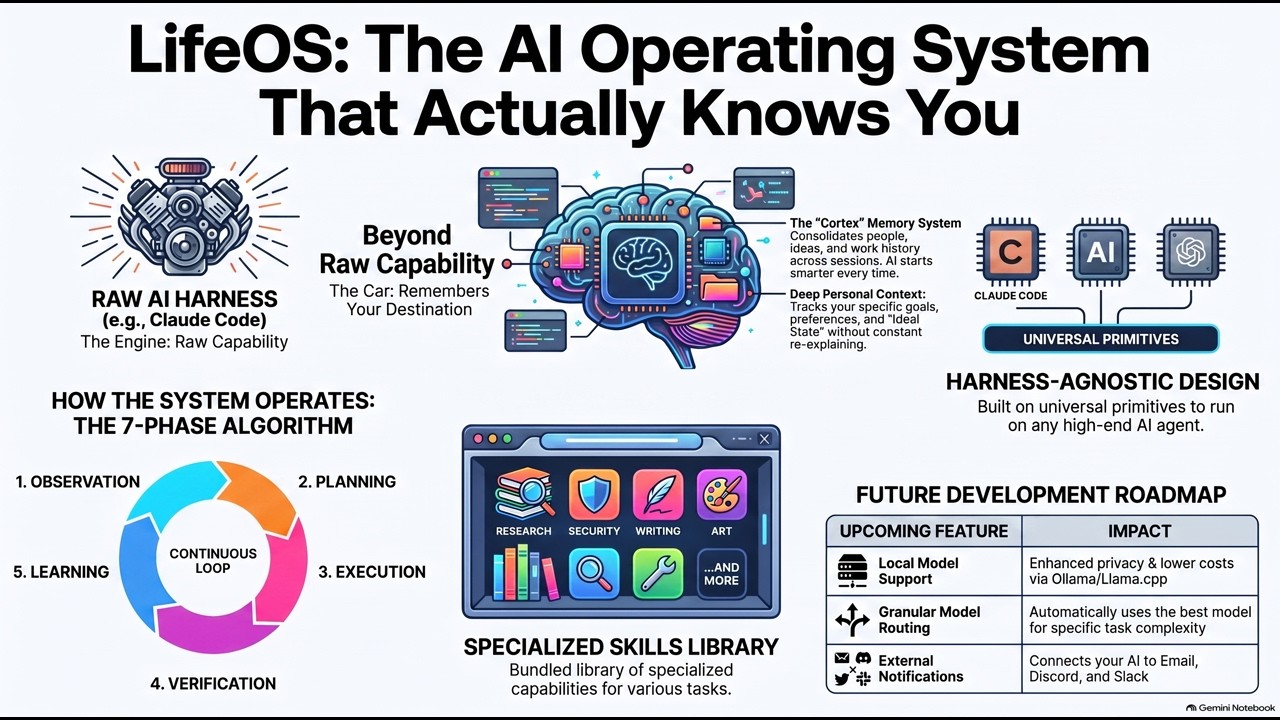
LifeOS is an intent engineering platform that transforms AI interactions by capturing your goals, context, and definition of done to guide every AI task toward your ideal state. Rather than focusing on prompt engineering, it addresses the fundamental problem of AI models receiving unclear direction by systematically defining your objectives and providing context about your current situation and desired outcomes.
How does the TELOS framework work?
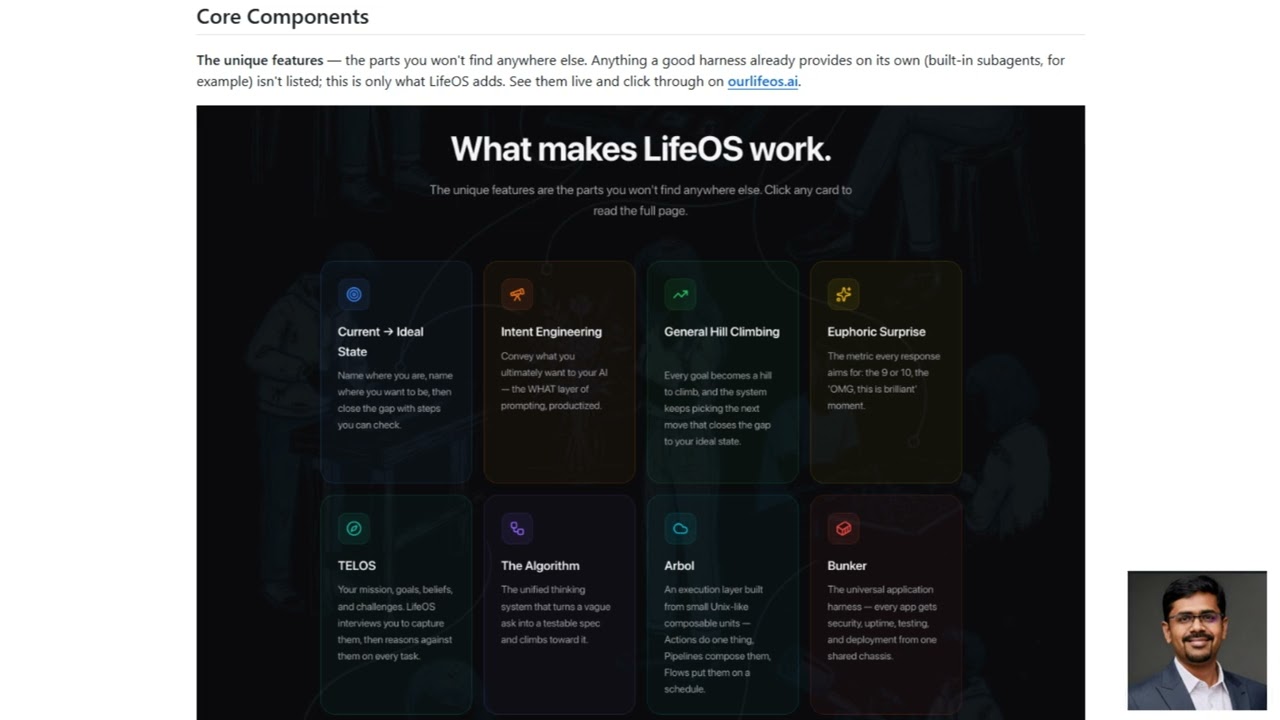
The TELOS framework interviews users to understand their mission, goals, beliefs, and challenges, creating a comprehensive profile of what they're ultimately trying to achieve. This captured intent is then conveyed to AI models on every task and used to verify results against defined criteria, ensuring consistent alignment with your objectives.
What is the Current → Ideal State methodology?
This methodology helps users name their current position, define their target destination, then follow systematic steps to close the gap between where they are and where they want to be. The Algorithm serves as the core thinking system that transforms vague requests into testable specifications and uses General Hill Climbing techniques to progress toward the defined ideal state.
What are the main components of LifeOS?
LifeOS includes several integrated components: Arbol (execution layer with Unix-like composable units), Cortex (memory system), Synapse (input router), Pulse (Life Dashboard), ISA System (completion criteria), Atlas (asset mapping), and Ledger (version control). It also features Voice notifications, a Learning system, and Hermes Sidecar for agent-based interactions.
Is LifeOS free to use?
LifeOS is open-source and available on GitHub, which means it's free to use. You can install it either by pasting a simple prompt into AI engines like Claude or via terminal command, and users can star, fork, and contribute to the project through GitHub's standard collaboration features.
What platforms is LifeOS available on?
LifeOS is available as a web tool and can be installed through AI engines like Claude or via terminal command. Since it's open-source on GitHub, it's accessible through standard web browsers and command-line interfaces.
What makes LifeOS different from other AI productivity tools?
LifeOS differentiates itself by focusing on intent engineering rather than prompt engineering, providing a systematic framework for goal achievement rather than just task automation. Its emphasis on moving users from current to ideal states through measurable progress, combined with comprehensive memory and learning systems, positions it as a life optimization platform rather than a simple AI interface tool.
What types of projects can I use LifeOS for?
LifeOS supports various use cases including finding life purpose, coding projects, shipping startups, building applications, and pursuing personal goals. Its systematic approach to defining and achieving ideal states makes it suitable for both professional projects and personal development objectives.
Compare LifeOS
Compare with another toolMore Like This
