What it is
Overview
LangGraph is an orchestration framework for building multi-step AI agent workflows with explicit state management and human approval gates. It's not an AI model — it's infrastructure code that wraps LLM calls in a graph structure where each node is a function, each edge is a routing decision, and the state persists across steps. Developers building production agent systems use it when they need agents that can pause for human input, retry failed steps, or run multiple sub-agents in parallel. The audience is backend engineers and ML engineers who already write Python and want more control than a chat interface offers.
At a glance
Usability & Quality overview
Best for
- stateful multi-step AI agents
- human-in-the-loop workflow orchestration
- complex branching and checkpointed agent logic
Watch out for
- steep learning curve
- verbose abstractions for simple agents
- documentation confusion
Real product, not a wrapperIndependent product
LangGraph provides graph-based workflow abstractions (StateGraph, conditional edges, checkpointing) that you cannot get by typing prompts into ChatGPT or Claude. It automates multi-step agent workflows with loops, branching, and human-in-the-loop approvals — features that require custom code if you're working directly with LLM APIs. Multiple developers explicitly compare it favorably to 'just calling an LLM in a loop,' confirming it adds substantial orchestration value beyond API wrappers.
Strong evidenceQuality score
LangGraph Stateful AI agent orchestration with strong control for complex workflows.
This score is our editorial judgment, computed automatically from the sources, weights, and dates shown above. It reflects the data we could verify as of November 12, 2026, not a guarantee or statement of fact about LangGraph. Third-party ratings and quotes belong to their original platforms and authors. Thin data lowers our confidence label, and we say so instead of guessing. Work on LangGraph? Dispute any datapoint and we will review it, publish your response, and correct verified errors.
Plans
Pricing
How free is free?
Genuinely free
5k traces/mo free; pay-as-you-go after
What you get for free
- Up to 5,000 base traces per month included
- Pay-as-you-go pricing after free quota
- Community support access
- 1 seat maximum (solo user)
- Core LangGraph framework for building agent workflows
Behind the paywall
- Agent Server accessPlus ($39/mo)
- Agent Engine accessPlus ($39/mo)
- Unlimited seats for team collaborationPlus ($39/mo)
- 10k base traces/month (higher quota)Plus ($39/mo)
- Self-hosted and hybrid deploymentEnterprise (custom pricing)
- Custom SSO, ABAC, and RBACEnterprise (custom pricing)
- Support SLAEnterprise (custom pricing)
Community feedback
Aggregated reviews
Ratings and quoted comments below are aggregated from third-party sources and reflect those users' views, not SearchTools.ai's.
What reviewers talk about
themes inside the Sentiment pillar — not score ingredients
71Output Quality54 mentions
“This hits exactly what I've been trying to articulate to clients for months. The shift for me came when I started measuring 'useful outputs per dollar of compute' instead of architectural elegance. A single agent with well-scoped tools and a tight system prompt almost always beat the 5-agent pipeline I'd spent a week designing. The pattern I see now: complexity in agent systems usually compensates for vagueness in problem definition. When I'm forced to add a coordinator agent or a critic age”
“Been running LangGraph agents in prod for months. Same nightmare every deploy: works great locally, then suddenly wrong tools, pure hallucinations, or the classic OpenAI bill jumping from $80 to $400 overnight. Got sick of users being my QA team so I built a proper eval harness and just open sourced it as EvalView. Super simple idea: YAML test cases that actually fail CI when the agent does something stupid. name: "order lookup" input: query: "What's the status of order #12345?" expected: tools:”
“Today I got rejected after a job interview for not being "technical enough" because I use PyTorch/CUDA/GGUF directly with FastAPI microservices for multi-agent systems instead of LangChain/LangGraph in production. They asked about 'efficient data movement in LangGraph' - I explained I work at a lower level with bare metal for better performance and control. Later it was revealed they mostly just use APIs to Claude/OpenAI/Bedrock. I am legitimately asking - not venting - Am I missing something by”
“2026 fresher, working full-time in GenAI/LLM systems (₹2.5 LPA). Here's what I've actually built across both application and inference layers: GenAI/Application side: RepoMind agentic RAG system, chat with any GitHub repo in natural language, live deployed (LangGraph, tree-sitter, FastAPI, ChromaDB) Built an AI-powered assessment generation pipeline using n8n and LLMs, replacing a third-party testing platform and reducing per-candidate costs by ~99.7%. Built a RAG pipeline completely from scratc”
49Value & Pricingthin data · 9 mentions
“LangGraph is a framework for building agentic workflows. It supports several useful capabilities, such as human-in-the-loop steps, state management within workflows, and conditional execution. It adds extra intelligence to AI models, and in this way an LLM’s performance can improve by combining the model with the latest knowledge. LangGraph integrations with Python are very simple.It improve the performance of the LLM/AI inteligence.There is no pricing and subscriptions to access Lang graph.Any ”
“I just accidentally let a LangGraph agent loop on a broken tool over the weekend and woke up to a massive API token burn. How are you guys preventing runaway cloud bills when your autonomous agents get stuck in logic loops? Are you just hardcoding static limits, or is there a better way to catch it?”
“Running a low-volume agent in "production" — single tenant, human-in-the-loop, maybe a few thousand runs a month, nothing crazy. Built on LangGraph, deployed on LangGraph Platform. Just got a bill I wasn't expecting. Turns out the deployment is billed on uptime, not traffic — the database is live 24/7 so it charges continuously even when literally nothing is hitting it. Most of the cost was the always-on Postgres, not the graph runtime. During a quiet stretch with basically zero orders it still ”
“-cost, agentic services are more expensive when customized -control over data and infrastructure - business safety, because those providers are not 100% available all the time, if they have outage, your service is doomed -commmon sense, all providers now are still in startup mode, they can change pricing and service at any time”
53Reliability15 mentions
“Every other day I see someone drop "I just built a 12-agent orchestration system with LangGraph and CrewAI" like it's a flex. I used to be that person. Two years and 25+ agents later the ones that actually run in production, bring in consistent revenue, and don't wake me up at 3am? They're almost offensively simple. Here's what's actually printing money for me right now: Email-to-CRM updater. One agent. $200/month. Never breaks. Resume parser for recruiters. Pulls structured data, done. $50/mont”
“I just accidentally let a LangGraph agent loop on a broken tool over the weekend and woke up to a massive API token burn. How are you guys preventing runaway cloud bills when your autonomous agents get stuck in logic loops? Are you just hardcoding static limits, or is there a better way to catch it?”
“Been running LangGraph agents in prod for months. Same nightmare every deploy: works great locally, then suddenly wrong tools, pure hallucinations, or the classic OpenAI bill jumping from $80 to $400 overnight. Got sick of users being my QA team so I built a proper eval harness and just open sourced it as EvalView. Super simple idea: YAML test cases that actually fail CI when the agent does something stupid. name: "order lookup" input: query: "What's the status of order #12345?" expected: tools:”
“We built the same simple agent (one custom tool, one instruction) in all 9 major frameworks and ran 90 live tests. LangGraph is still a powerhouse, but the landscape has shifted. Here's our honest take. Where LangGraph still crushes it: State management is unmatched. The graph-based approach for complex multi-step workflows (loops, branching, human-in-the-loop) is still the gold standard. Production-grade resilience. Retry logic, checkpointing, partial failure handling — LangGraph handles it nat”
51Ease of Use38 mentions
“LangGraph has become the backbone of every multi-agent system I build. The StateGraph abstraction is what sets it apart being able to define nodes, conditional edges, and loops as explicit graph structure means your agent's decision flow is actually readable and debuggable, not a black box buried in prompt chains. What I use most: conditional routing between agents, parallel node execution, and persistent memory across turns. In production, I compiled a database-backed drag-and-drop workflow eng”
“Langchain? No shit, that's the messiest and most over-engineered LLM framework out there. Nobody needs that amount of abstraction when you're just doing API calls. There's nothing technical about throwing and receiving strings over HTTPS, lmao. I'm starting to warm up to Microsoft's Agent Framework. It's good for workflows, a little messy for RAG but still usable, and the built-in agent patterns are great for prototyping. You dodged a bullet there and I'm sure your skill sets will be valued so”
“I would not want to work for any company that took langchain/langgraph seriously and wanted to use it in production. I've gone on a purge and am actively teaching my teammates how easy everything is outside of it. Langchain is a burning pile of piss that doesn't even do demos well. It's an overly complex abstraction on simple problems with shit documentation and constantly changing code bases.”
“LangChain and LangGraph frameworks were fantastic when we were just getting started with using LLM. But they are hopelessly complicated now. I can see your interviewers' point: they are invested in this ecosystem and they want someone who can keep the systems going. edit : grammar”
82Trust derived from dimensions + predator detectionview math
A composite of the quality dimensions weighted by mention volume, then capped by predator / abuse-detection rules.
Reasoning
Watch & learn
Video content
YouTube YOUTUBE12.2K views
LangChain vs. LangGraph vs. Deep Agents: When to Use Each One
LangChain18 days ago
 YOUTUBE926 views
LangChain vs LangGraph: Which to Use for AI Agents?
TestMuAI21 days ago
 YOUTUBE1.2K views
LangGraph vs CrewAI vs n8n which one actually ships in 2026
SatyajitPattnaik1 month ago
 YOUTUBE838 views
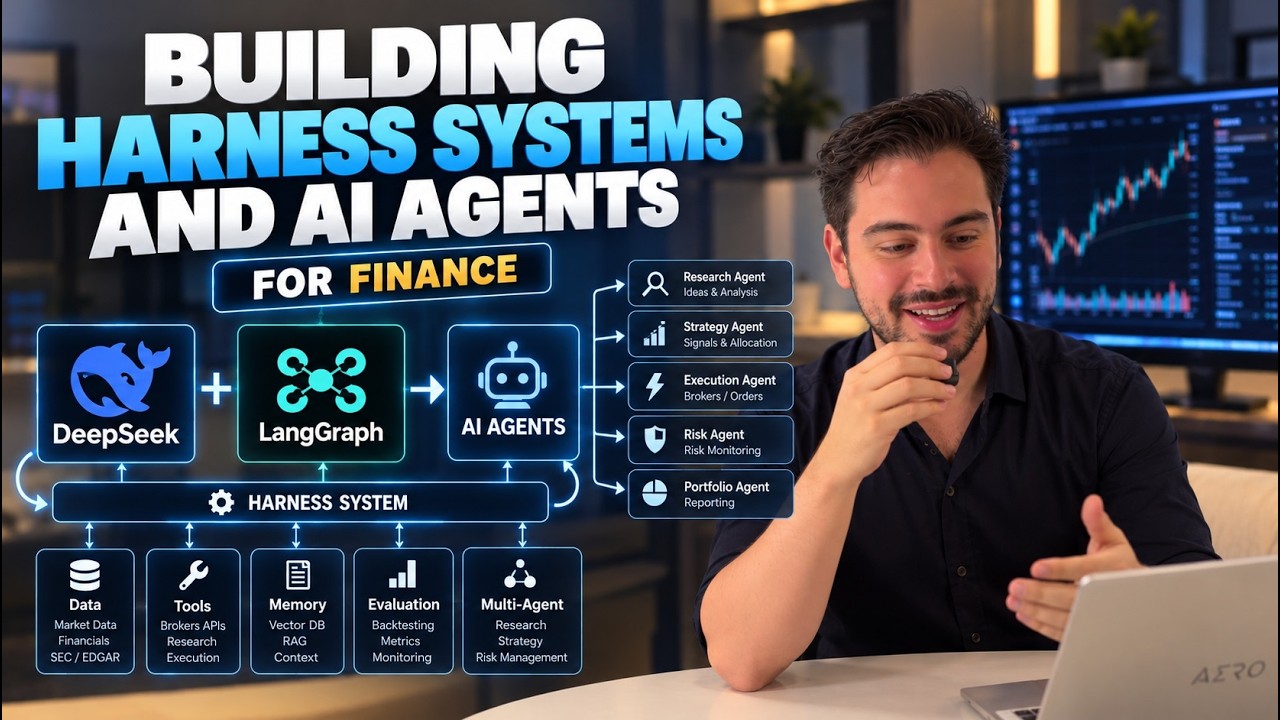
Build Your Own AI Finance Agents with LangGraph (Open Source)
DavidAriasCFA22225 days ago
 YOUTUBE1K views
Build a Real Agentic AI System with LangChain, LangGraph, RAG & MCP
aiiqlabs16 days ago
 YOUTUBE289 views
LangGraph vs LangChain: First Agent in 30 Lines
Enterprise_AI_Academy1 month ago
Capabilities
Key features
Agent Builder
Builds autonomous AI agents that plan and execute multi-step tasks for you
Workflow Management
Automates multi-step processes and routes tasks across your tools and team
The honest take
What users love & flag
Distinct themes surfaced across 153 reviews from 2 sources — each grounded in real review text, ranked by how often it comes up.
Questions
Frequently asked
What is LangGraph?
LangGraph is an open-source framework for building production-ready AI agents with granular control over their behavior and workflows. It provides low-level orchestration primitives that allow developers to design custom agent architectures ranging from simple single-agent systems to complex multi-agent and hierarchical workflows, with built-in support for human approval gates, persistent memory, and real-time streaming.
Is LangGraph free to use?
Yes, LangGraph itself is open source under an MIT license and completely free to use for Python developers. However, deployment through LangSmith Agent Server requires a paid plan, with LangSmith Plus starting at $39 per seat per month or Enterprise plans for advanced hosting and security needs.
What makes LangGraph different from other agent frameworks?
LangGraph provides expressive, low-level primitives rather than restricting developers to a single black-box cognitive architecture. This gives developers granular control over agent behavior and decision-making processes, making it suitable for complex, company-specific tasks that generic agent frameworks struggle with, while maintaining production-grade reliability.
How does human-in-the-loop functionality work in LangGraph?
LangGraph includes built-in human-in-the-loop functionality that allows developers to add moderation points and approval gates throughout agent workflows. Agents can pause at these designated points and wait for human review before proceeding with actions, providing control over critical decisions in customer-facing or automated systems.
Can LangGraph agents remember previous conversations?
Yes, LangGraph features persistent memory capabilities that store conversation histories and maintain context across sessions. This enables agents to deliver personalized interactions over time by remembering past exchanges and user preferences.
What deployment options are available for LangGraph agents?
LangGraph agents can be deployed through three options: fully managed cloud hosting through LangSmith, hybrid deployment with a SaaS control plane and self-hosted data plane where no data leaves your VPC, or fully self-hosted deployment on your own infrastructure. Deployment requires LangSmith Plus or Enterprise plans.
Does LangGraph support real-time streaming of agent outputs?
Yes, LangGraph provides first-class streaming support with token-by-token output that displays agent reasoning and actions in real-time. This helps bridge user expectations with agent capabilities by showing the thinking process as it happens, and the framework is designed to add zero performance overhead.
Can I build multi-agent systems with LangGraph?
Yes, LangGraph supports designing control flows from single-agent systems to complex multi-agent and hierarchical architectures using a unified framework. Developers can construct custom multi-agent workflows with the flexibility to implement diverse agent architectures tailored to their specific operational needs.
What programming languages does LangGraph support?
LangGraph is available for Python developers through the LangChain ecosystem. The framework is open source under an MIT license and can be integrated into Python-based projects.
How does LangGraph handle agent state management?
LangGraph manages agent state throughout execution, tracking progress through multi-step workflows. This state management ensures that agents can maintain context and progress as they move through complex, multi-step processes, enabling reliable execution of sophisticated workflows.
Compare LangGraph
Compare with another toolMore Like This
