
What it is
Overview
A cloud-based data engineering and machine learning workspace that unifies analytics workloads across AWS, Azure, and Google Cloud. Data engineers and ML teams use it to process large datasets, build models, and manage data pipelines in collaborative notebooks. Built around Apache Spark for distributed computing and Delta Lake for data versioning. The 5.7 million monthly visits skew heavily toward enterprise data teams managing multi-terabyte workloads.
At a glance
Usability & Quality overview
Best for
- enterprise teams building Spark data pipelines
- multi-cloud data and AI workload unification
- teams needing scalable data processing infrastructure
Watch out for
- Limited individual user experience data available in search results
- Pricing complexity with DBU (Data Processing Unit) model that may be hard to predict
- No found switching stories or detailed complaint analysis to validate long-term satisfaction
Real product, not a wrapperIndependent product
Databricks offers significant value beyond basic AI chat interfaces through its proprietary Delta Lake technology, extensive cloud platform integrations, and unified workflow automation that combines data engineering, analytics, and machine learning in one platform.
Strong evidenceQuality score
Databricks A scalable platform for unifying data, analytics, and AI workloads across clouds with Spark, but pay-as-you-go DBU pricing can be expensive at scale
This score is our editorial judgment, computed automatically from the sources, weights, and dates shown above. It reflects the data we could verify as of July 15, 2026, not a guarantee or statement of fact about Databricks. Third-party ratings and quotes belong to their original platforms and authors. Thin data lowers our confidence label, and we say so instead of guessing. Work on Databricks? Dispute any datapoint and we will review it, publish your response, and correct verified errors.
Plans
Pricing
How free is free?
Trial only
Free trial access; production use requires pay-per-DBU pricing starting $0.07-0.40
What you get for free
- Free access to Databricks Data Intelligence Platform
- Trial access to unified data, analytics and AI workloads
Behind the paywall
- Data Engineering pipelinesData Engineering ($0.15/DBU)
- SQL queries and BI reportingData Warehousing ($0.22/DBU)
- Interactive data science workloadsInteractive Workloads ($0.40/DBU)
- Production GenAI and ML appsArtificial Intelligence ($0.07/DBU)
- AI assistance (Genie)Genie ($0.07/DBU beyond free usage)
Cost to actually use
Based on 15 classified review complaints about rate limits, credits, and billing.
Community feedback
Aggregated reviews
Ratings and quoted comments below are aggregated from third-party sources and reflect those users' views, not SearchTools.ai's.
What reviewers talk about
themes inside the Sentiment pillar — not score ingredients
72Output Quality140 mentions
“Databricks. period. Snowflake cant even imagine the speed at which dbricks is evolving”
“Abismal user experience Terribly slow UI, no clue why, structure is far from intuitive and AI, that is supposed to help, doesn't answer Question but tries to interpret it and solve it straight away”
“Databricks is good for just anything related to data. It’s as good or even better than snowflake for data warehousing . If your organisation doesn’t want to be vendor locked, databricks is the choice hands down.”
“Best in the industry | Currently the best Data Science tool for a large-scale company that needs strong tech support once and a while. The performance and the connectivity/integration with a large bread of tools and platform is also important when you don't want to change all you”
49Value & Pricing24 mentions
“I'm really happy to see this. I think Databricks' BI solution with AI/BI Dashboards and Genie is really good. Much cheaper than Power BI, much easier to integrate, etc. But sometimes you run into the issue of missing visualizations. This basically solves that problem.”
“This is a scam don't trust them, the account is fake and you cannot withdraw nothing because they ask you to deposit every time more than you gain, I have lost 2k€ in one day ”
“Became their "customer" by acquisition of another company, as I didn't agree with new T&C, I requested to delete my account. It took quite some time until a notification they have fulfilled my request. I attempt to log in and... they send me by email a valid verification code (a ”
“On July 8, 2026, Databricks introduced one of the biggest changes to its AI experience. Databricks AI Agent Genie products (Genie Code, Genie Spaces, and Genie One) are no longer free, as I wrote earlier. Instead, they now use a pay-as-you-go pricing model based on AI token consu”
35Reliabilitythin data · 6 mentions
“unified data analytics | for a new team with less number of users Databricks outshines due to the unified analytics , and provided all solutions from data ingestion to data lake ETL , to data consumption with a modern notebook . The Databricks GPU and Spark runtimes are also ver”
“My first major project as a Senior Data Engineer, was migrating a decade-old time-series database for a semiconductor company to the cloud. The constraint: sub-second latency on customer queries. Equipment monitoring and predictive maintenance don't work with slow data. We had De”
“Data for insights | [Databricks Lakehouse Platform (Unified Analytics Platform)] makes the power of Spark accessible. Databricks's proactive and customer-centric service. It is a highly adaptable solution for data engineering, data science, and AI. Load times are not consistent a”
“Great solution for your ETL workloads! — We are using Databricks for blockchain ETL workloads — A construção de querys e dashboards são elaboradas de forma prática e intuitiva, ferramenta indispensável para o controle e análise de dados para uma empresa de médio e grande porte. —”
67Supportthin data · 5 mentions
“Powerful tool for data analysis — We are using Databricks for blockchain ETL workloads — - Documentation is GREAT\ - Implementation is mostly straight-forward\ - The service is easy to use and full of features\ - Support is top-notch\ - The interviews we had with the DB guys wer”
“Best in the industry | Currently the best Data Science tool for a large-scale company that needs strong tech support once and a while. The performance and the connectivity/integration with a large bread of tools and platform is also important when you don't want to change all you”
“The notebook experience is one of the premium features I use very often. It saves me time, and I spend less time on operational tasks compared to actually working productively with data because the user flow is so simplified. The biggest advantage is having ML and data engineerin”
“Databricks Review — Databricks was chosen as part of a new cloud based data platform. Engagement from the company could be better, however the product itself does the job — -Open source\ -Built upon excellent technologies\ -Broad set of data ingestion sources \ -Reliable and scal”
69Ease of Use72 mentions
“Best analytics platform I have ever used. Easy for any data scientist to work on. Dashboard, jobs creation all very easy.”
“Abismal user experience Terribly slow UI, no clue why, structure is far from intuitive and AI, that is supposed to help, doesn't answer Question but tries to interpret it and solve it straight away”
“Most collaborative Data Science & AI workspace ! | Databricks shines when you are working with a growing team of multiple data professions. By providing an easy to instantiate common workspace for Data Engineers, Data Scientist, ML Engineers and Data Analyst, fully integrated wit”
“Positive review for Databricks Lakehouse Platform | Databricks is great for beginner as well as advanced coders. The interface is extremely user-friendly and the learning curve is quite short. It is well suited for automation where we can have scripts running late at night when t”
84Trust derived from dimensions + predator detectionview math
A composite of the quality dimensions weighted by mention volume, then capped by predator / abuse-detection rules.
Reasoning
Watch & learn
Video content
YouTube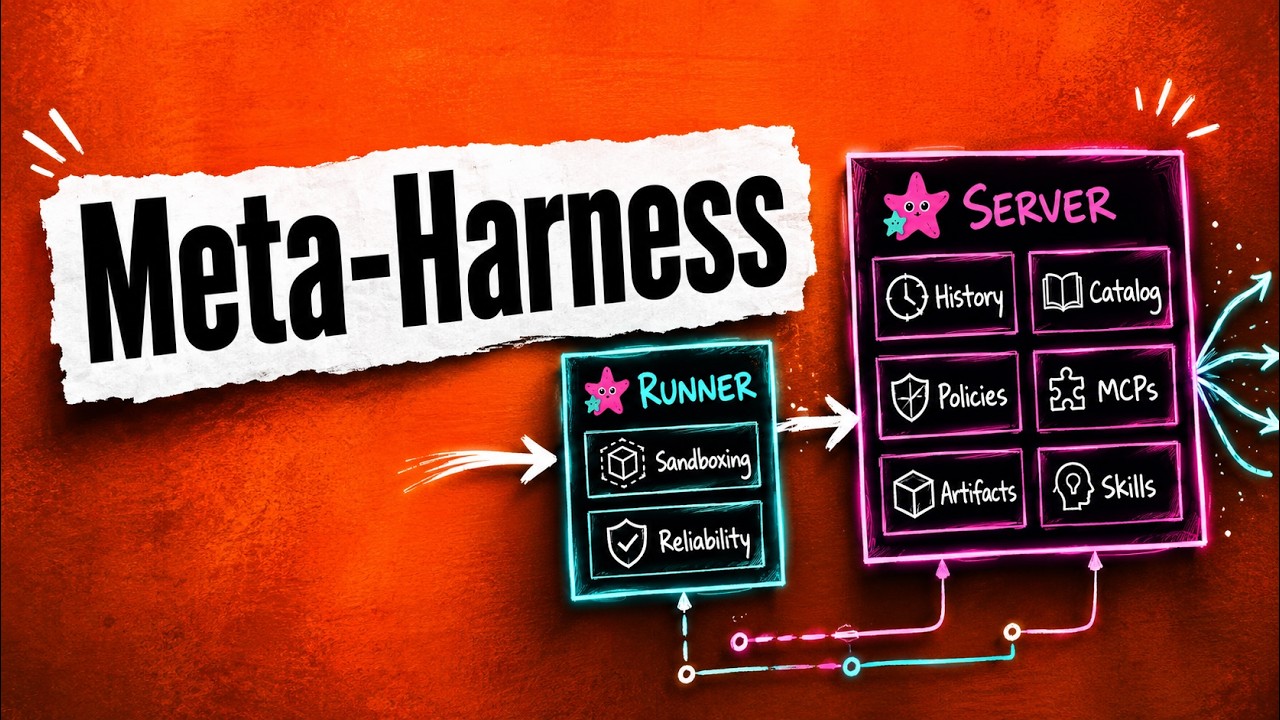 YOUTUBE15K views
This Meta-Harness Changes How You Run AI Agents
engineerprompt3 months ago
 YOUTUBE662 views
I Watched Every Databricks Data + AI Summit 2026 Announcement So You Don't Have To
dataengineeringdan3 months ago
 YOUTUBE1.9K views
Databricks Genie Spaces
PragmaticWorks3 months ago
 YOUTUBE585 views
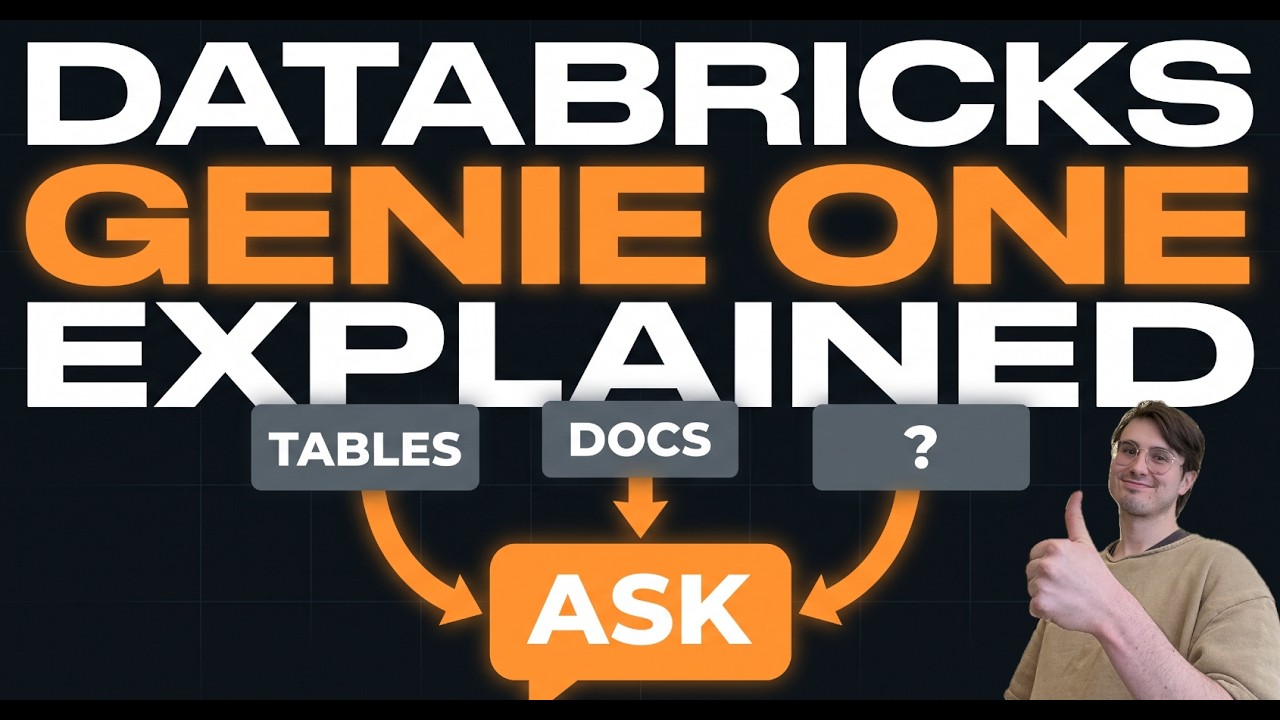
Databricks Genie One Explained: Your New AI Data Coworker
thedataandaiguy3 months ago
 YOUTUBE3.6K views
Meta-Harness: The Layer That Coordinates Claude Code and Codex Together (Omni Agents)
MatheusBattisti3 months ago
 YOUTUBE423 views
Databricks - Release Notes, Decoded #9 - 06/07/2026 (Databricks Data + AI Summit 2026 Updates)
DATAPAO3 months ago
Capabilities
Key features
Analytics Assistant
Interprets data, surfaces trends, and answers questions about your business metrics
Code Assistant
Helps you write, explain, and fix code directly inside your editor
Agent Builder
Builds autonomous AI agents that plan and execute multi-step tasks for you
Large Language Models (LLMs)
General-purpose models that understand and generate text across many tasks
The honest take
What users love & flag
Distinct themes surfaced across 1.4K reviews from 6 sources — each grounded in real review text, ranked by how often it comes up.
Questions
Frequently asked
What is Databricks?
Databricks is a unified data, analytics, and AI platform that operates across multiple cloud providers (AWS, Azure, and Google Cloud). It addresses the challenge of managing fragmented data tools by providing a single environment for data engineering, warehousing, machine learning, and AI development. The platform serves over 60% of Fortune 500 companies and uses a lakehouse architecture to eliminate traditional data warehouse costs while maintaining performance.
How much does Databricks cost?
Databricks uses a pay-as-you-go pricing model based on Databricks Units (DBUs) with per-second granularity and no upfront costs. Pricing varies by workload: Data Engineering starts at $0.15/DBU, Data Warehousing at $0.22/DBU, Interactive workloads at $0.40/DBU, and AI workloads at $0.07/DBU. A free trial is available, though you'll pay your cloud provider for underlying compute resources.
What can I do with Databricks?
Databricks enables you to orchestrate data processing pipelines with Lakeflow, run SQL queries for business intelligence, build and deploy AI agents with Agent Bricks, and create interactive data science workloads. It also supports natural language data querying, chart generation, conversational AI chat, RAG/knowledge base Q&A, workflow automation, and code generation. The platform includes Unity Catalog for unified governance across all your data and AI assets.
Is Databricks available as a free trial?
Yes, Databricks offers free access to the complete Data Intelligence Platform during the trial period. However, you'll still need to pay your cloud provider for the underlying compute resources used during the trial. This allows you to test all platform capabilities before committing to paid usage.
What are Databricks Units (DBUs) and how do they work?
Databricks Units (DBUs) are the pricing metric used across the platform's pay-as-you-go model. Different workload types consume DBUs at different rates - for example, AI workloads start at $0.07/DBU while interactive workloads cost $0.40/DBU. Usage is calculated per-second with no upfront costs, and organizations with predictable usage can get discounts through Committed Use Contracts.
Can Databricks work across multiple cloud providers?
Yes, Databricks operates across AWS, Azure, and Google Cloud using the same unified platform. This cross-cloud approach allows organizations to use consistent tools and processes regardless of their cloud provider choice. You can even use the same platform across multiple clouds simultaneously, with Committed Use Contracts providing discounts that apply across all cloud environments.
What is Unity Catalog in Databricks?
Unity Catalog is Databricks' unified governance system that manages data, models, dashboards, and AI agents across the entire platform. It provides centralized control and oversight for all your data and AI assets, ensuring consistent governance policies regardless of which Databricks module or cloud environment you're using.
What platforms can I access Databricks on?
Databricks is available as a web-based tool that you can access through your browser, and there's also an iOS mobile app available. The platform runs on major cloud providers (AWS, Azure, Google Cloud) but is accessed through these interfaces rather than requiring separate installations on each cloud.
Compare Databricks
Compare with another toolMore Like This
