
Arize Phoenix
What it is
Overview
Arize Phoenix traces LLM calls and agent workflows step-by-step, then surfaces where outputs drift or break. Not an AI tool itself — it's an observability layer for teams building with LLMs. Open-source with no usage caps, runs on a local machine or self-hosted infrastructure. The audience in reviews is ML engineers and backend developers debugging multi-step agent chains or evaluating prompt quality across production runs.
At a glance
Usability & Quality overview
Best for
- LLM application tracing
- agent workflow debugging
- self-hosted AI observability
Watch out for
- Expect some setup effort
- Advanced config may need community help
Real product, not a wrapperIndependent product
Phoenix provides specialized infrastructure for tracing and evaluating LLM applications that ChatGPT doesn't offer. It chains multiple workflow steps (trace → eval → annotation) without requiring you to prompt each step manually, integrates natively with developer tools like LangChain and Azure Monitor, and includes 50+ pre-built evaluation metrics. One reviewer described inspecting 'exact vector similarity scores' in a multi-step agent execution tree — functionality you can't replicate by typing into a general LLM chat interface.
Strong evidenceQuality score
Arize Phoenix Open-source AI observability for tracing and evaluating LLM workflows, with setup and self-hosting overhead.
This score is our editorial judgment, computed automatically from the sources, weights, and dates shown above. It reflects the data we could verify as of November 16, 2026, not a guarantee or statement of fact about Arize Phoenix. Third-party ratings and quotes belong to their original platforms and authors. Thin data lowers our confidence label, and we say so instead of guessing. Work on Arize Phoenix? Dispute any datapoint and we will review it, publish your response, and correct verified errors.
Plans
Pricing
How free is free?
Free with limits
25k spans/mo & 15-day retention; Pro $50/mo for teams
What you get for free
- 25,000 trace spans per month
- 1 GB ingestion volume per month
- 15 days data retention
- No credit card required to start
- Full observability features (tracing, evaluation, prompt iteration)
- Can run locally or self-host (open-source)
Behind the paywall
- Higher span limits (50k spans/mo)Pro ($50/mo)
- Increased ingestion volume (10 GB/mo)Pro ($50/mo)
- Extended retention (30 days)Pro ($50/mo)
- Unlimited spans and custom retentionEnterprise (custom pricing)
- SaaS or self-hosted deployment optionsEnterprise (custom pricing)
Community feedback
Aggregated reviews
Ratings and quoted comments below are aggregated from third-party sources and reflect those users' views, not SearchTools.ai's.
What reviewers talk about
themes inside the Sentiment pillar — not score ingredients
69Output Quality14 mentions
“What I like most about Arize Phoenix is how easy it makes debugging and monitoring AI applications. The tracing is clear, the insights are genuinely useful, and it saves me a lot of time when I’m trying to pinpoint where an LLM workflow is going wrong. Overall, it feels practical and intuitive, and it comes across as something built for real-world use rather than just a demo. The biggest downside is that Phoenix can feel a bit overwhelming at first. There are a lot of features and concepts to wr”
“The eval scores are green, and an hour ago the model still handed a confidently wrong answer to a real user. That is the gap almost nothing in this space closes. Every LLM eval and observability tool we have run scores the response after it is already served. Great for turning that failure into a regression test. No help at all for stopping it in the moment. Two questions mattered to us: does it block a bad generation before the user sees it, and can you self-host the whole loop without an enter”
“In our FastAPI backend, we use LangChain to orchestrate contents inventory claims. What makes Phoenix exceptional is its native support for distributed tracing standards, seamlessly connecting with our Azure Monitor setup. When our agents extract detailed contents - such as matching a "White French Provincial style wood double dresser" to a Wayfair pricing source - Phoenix maps the entire execution tree. Instead of just seeing the final output, I can inspect the exact vector similarity scores fr”
“I really like Arize Phoenix's tracing and visibility features for LLM applications. It's so helpful to follow the trace and see exactly what happened at each step when something's not quite right, saving me tons of guesswork. The evaluation and monitoring features are great too, especially for comparing results and catching issues early on during development and tuning of AI workflows. I find LLM tracing, evaluations, and observability dashboards to be the most valuable features. Tracing stands ”
93Value & Pricingthin data · 5 mentions
“I’m working on the team at Arize Phoenix We’re totally free and open-source. Nothing gated in the open-source version whatsoever. https://github.com/Arize-ai/phoenix There’s also a free hosted version on our site you can access instead of self-hosting if that’s easier. That comes with 10gb of data. From a feature perspective, we’ll cover everything langfuse does, plus we go a bit deeper on evals and instrumentation. We maintain a set of LLM as a Judge eval templates that are benchmarked ”
“You should check out Phoenix. Fully open sourced, no gates on anything, has everything you’d find on any of these other competitors and it’s actually simple and light to install (aka no need to actually install clickhouse which is a nightmare). https://phoenix.arize.com”
“I like that Arize Phoenix is open-source and framework-agnostic, built on OpenTelemetry and OpenInference, so it works with most LLM stacks without vendor lock-in. It's fast to get started—you can spin up a local trace UI in minutes—and it includes 50+ pre-built evaluation metrics, with particularly strong support for RAG evaluation. The ability to self-host with no usage caps or feature gates makes it practical for teams that want full control over their data and costs while still getting enter”
“Arize Phoenix has made evaluating our customer support assistant's outputs much more structured, letting us run systematic evaluations against defined criteria instead of manually reviewing responses one by one. Being open-source made it easy to get started without upfront licensing costs, which mattered for testing whether the platform would fit our workflow before committing further. The interface for visualizing traces and evaluation results is intuitive, making it easy to spot patterns in wh”
67Ease of Usethin data · 8 mentions
“What I like most about Arize Phoenix is how easy it is to use, and how much it simplifies monitoring AI applications. The interface is straightforward and easy to understand, so I can quickly see what’s going on with my AI models. It helps me spot issues, interpret model performance, and troubleshoot problems with less effort. Overall, it’s a practical tool for keeping track of AI applications without making the process feel complicated. One thing I dislike is that some features take a little ti”
“Arize Phoenix is helpful for understanding how AI features behave within an application. I especially like being able to trace LLM calls, inspect the responses, and pinpoint where something goes wrong in a workflow. It also makes it easier to try different prompts and evaluate the results before I make changes to the application. The initial setup and configuration can take some time, especially when integrating Arize Phoenix into an existing backend application. Also, the documentation could be”
“What I like most about Arize Phoenix is how easy it is to get started with AI observability and tracing. The interface feels clean and intuitive, projects stay well organized, and I can explore traces and performance metrics with very little setup. Overall, it makes evaluating and debugging LLM applications much more straightforward, which is especially helpful during early development and testing. What I dislike about Arize Phoenix is that the initial setup, along with some of the more advanced”
“I like that Arize Phoenix is open-source and framework-agnostic, built on OpenTelemetry and OpenInference, so it works with most LLM stacks without vendor lock-in. It's fast to get started—you can spin up a local trace UI in minutes—and it includes 50+ pre-built evaluation metrics, with particularly strong support for RAG evaluation. The ability to self-host with no usage caps or feature gates makes it practical for teams that want full control over their data and costs while still getting enter”
88Trust derived from dimensions + predator detectionview math
A composite of the quality dimensions weighted by mention volume, then capped by predator / abuse-detection rules.
Reasoning
Watch & learn
Video content
YouTube YOUTUBE611 views
How to See Inside Your AI Agent: Tracing, Latency & Cost with Arize Phoenix | Part 1
TechyTacos1 month ago
 YOUTUBE124 views
Build an AI Agent Evaluation Platform from Scratch | Arize Phoenix + GKE + Grafana 100% Open Source
bhoopeshdevops6 days ago
 YOUTUBE210 views
How Uber is making evals the operating system for production AI agents with Arize
arizeai9 days ago
 YOUTUBE33 views
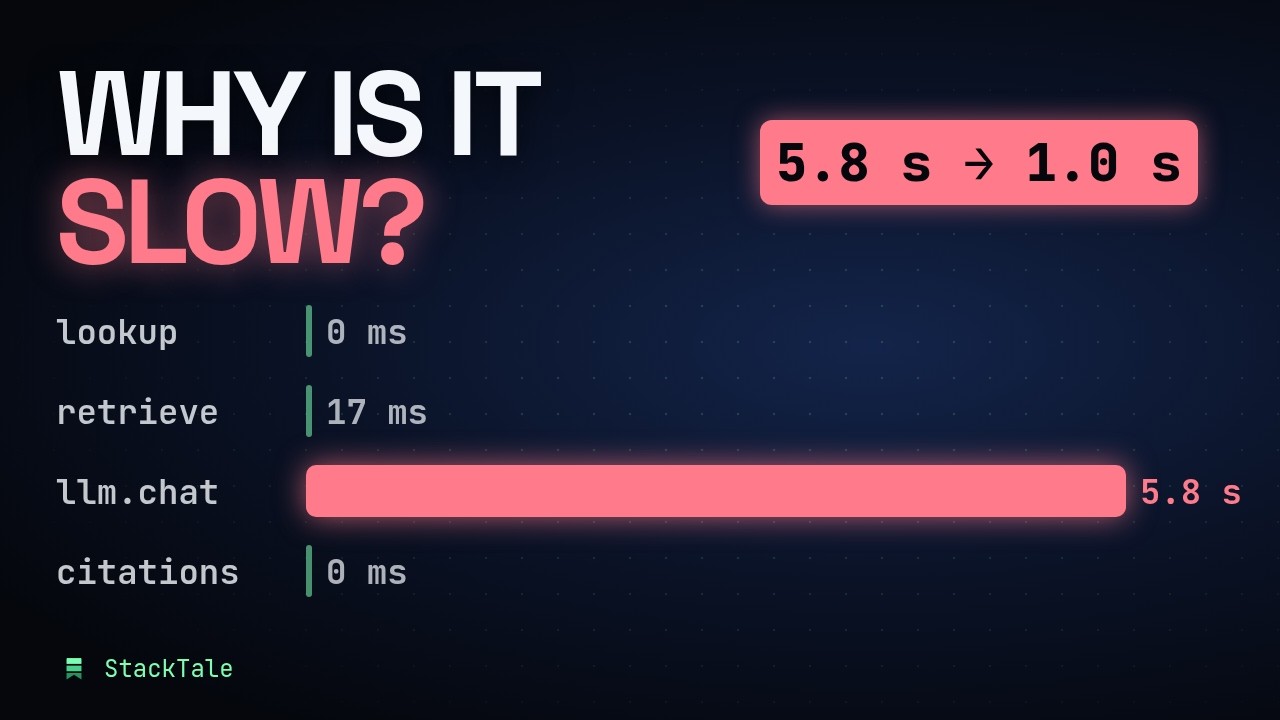
LLM Observability for Beginners: Find Why Your AI App Is Slow, Costly or Wrong (Real Python)
StackTale19 days ago
 YOUTUBE33 views
Help Desk RAG
taftwallace667026 days ago
 YOUTUBE18 views
I Can See Every Step My AI Takes on a Call (Free, Open Source)
autoreai19 days ago
Capabilities
Key features
Developer Tools
Provides utilities that help programmers build, test, and ship software faster
Testing & QA
Generates and runs software tests to catch bugs before code ships
Prompt
Helps you write, refine, and organize prompts that steer other AI models
The honest take
What users love & flag
Distinct themes surfaced across 35 reviews from 1 source — each grounded in real review text, ranked by how often it comes up.
Questions
Frequently asked
What is Arize Phoenix?
Arize Phoenix is an open-source observability platform that traces AI agent execution paths and evaluates LLM outputs. It captures every step of agent workflows including prompts, retrievals, tool calls, and outputs, helping developers debug failures and improve response quality before production deployment. The platform can run locally, be self-hosted, or used as a cloud service.
Is Arize Phoenix free?
Yes, Phoenix offers a free tier with 25,000 trace spans per month, 1 GB ingestion volume, 15-day retention, and unlimited users and evaluations. There's also a Pro plan at $50/month with 50,000 spans and 30-day retention, plus Enterprise options with custom pricing for scaled use cases.
What can I trace with Arize Phoenix?
Phoenix traces the complete execution path of AI agents, including prompts sent to LLMs, retrieval operations, tool calls, and final outputs. It uses OpenTelemetry-compliant tracing to record how requests propagate through multiple steps, and supports multi-modal tracing for image, voice, and PDF inputs.
How does Phoenix help me improve LLM quality?
Phoenix enables a continuous improvement loop through tracing, annotation, hypothesis formation, experimentation, and evaluation. You can identify patterns in problematic traces, create datasets from production data, test prompt and model changes under controlled conditions, and score outputs using built-in or custom evaluators that assess relevance, toxicity, and performance metrics.
Can I self-host Arize Phoenix?
Yes, Phoenix can be self-hosted to keep sensitive traces within your own infrastructure. Deployment options include running locally via terminal command, Docker containers, or Kubernetes with Helm charts for production environments. Enterprise plans also offer self-hosted deployment with features like SSO, audit logs, and SOC 2 compliance.
Does Phoenix work with any LLM provider or framework?
Yes, Phoenix is vendor-neutral and works with any model, framework, or programming language without proprietary lock-in. Its OpenTelemetry-native architecture ensures traces work with existing observability tooling, and it maintains integration partnerships with frameworks like LlamaIndex.
What evaluation metrics does Phoenix provide?
Phoenix evaluates LLM outputs across cost, latency, and performance metrics using both built-in and custom evaluators. It can assess response quality, relevance, toxicity, and monitor token usage across agent workflows, with support for human review or LLM-as-judge annotation methods.
Who uses Arize Phoenix?
Phoenix is used by teams ranging from individual developers to Fortune 500 companies including GitHub, Microsoft, and eBay for production AI applications. The open-source project has over 10,000 GitHub stars and 3 million monthly downloads, with ongoing contributions from the community.
Compare Arize Phoenix
Compare with another toolMore Like This
